Recent builds
Tools I've shipped or prototyped recently. Shown by screenshot rather than live link.
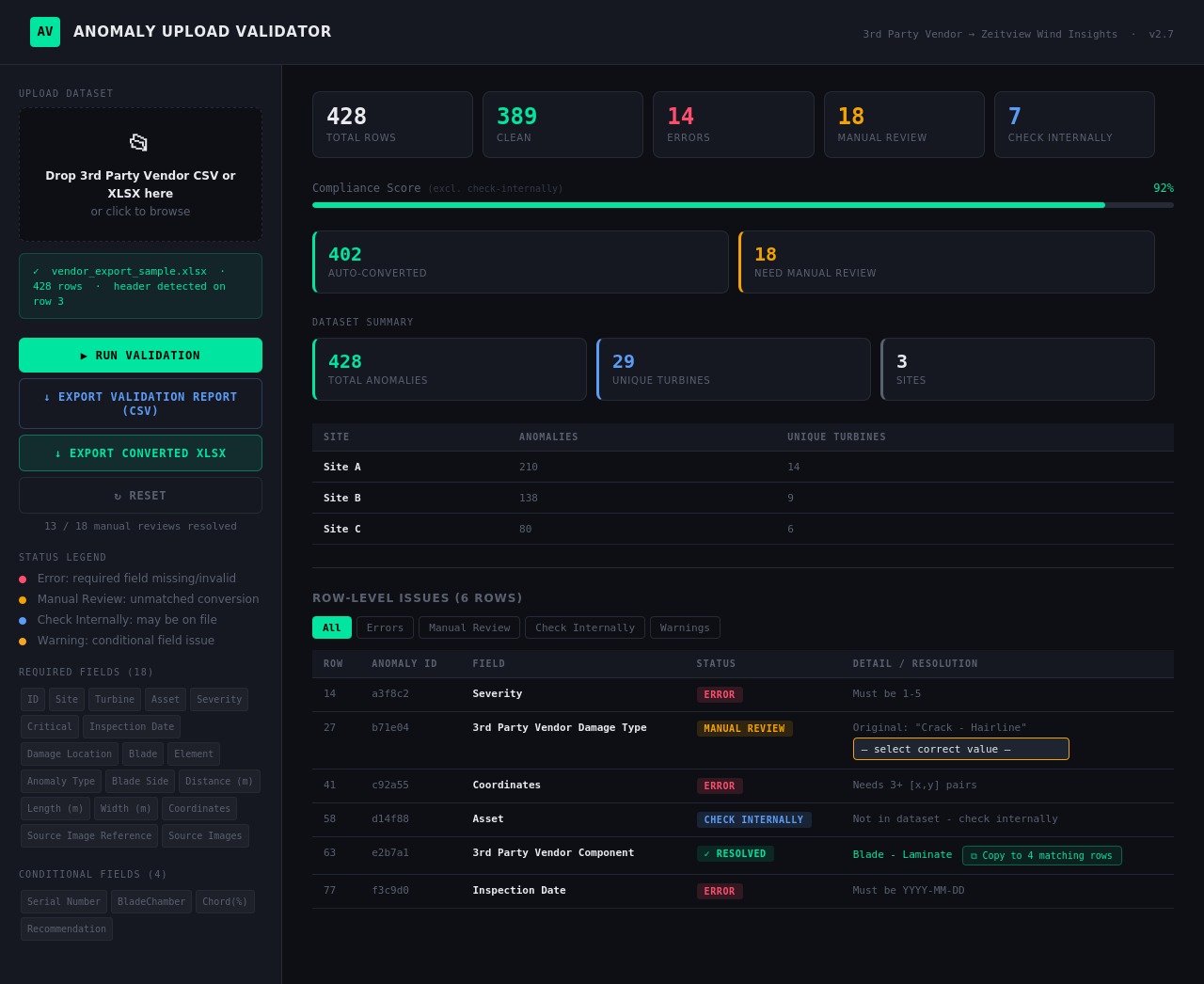
Anomaly Upload Validator
Internal Zeitview tool in active use. Third-party vendor datasets do not always match the required field schema. The tool validates a dataset against the spec before it reaches customer success or engineering, and automates the damage-matrix conversion across vendor, Zeitview, and client schemas without requiring engineering review. Saves up to five hours of customer success time and up to five hours of engineering time per project, across two to four projects per week.
Built with Claude · Hosted internally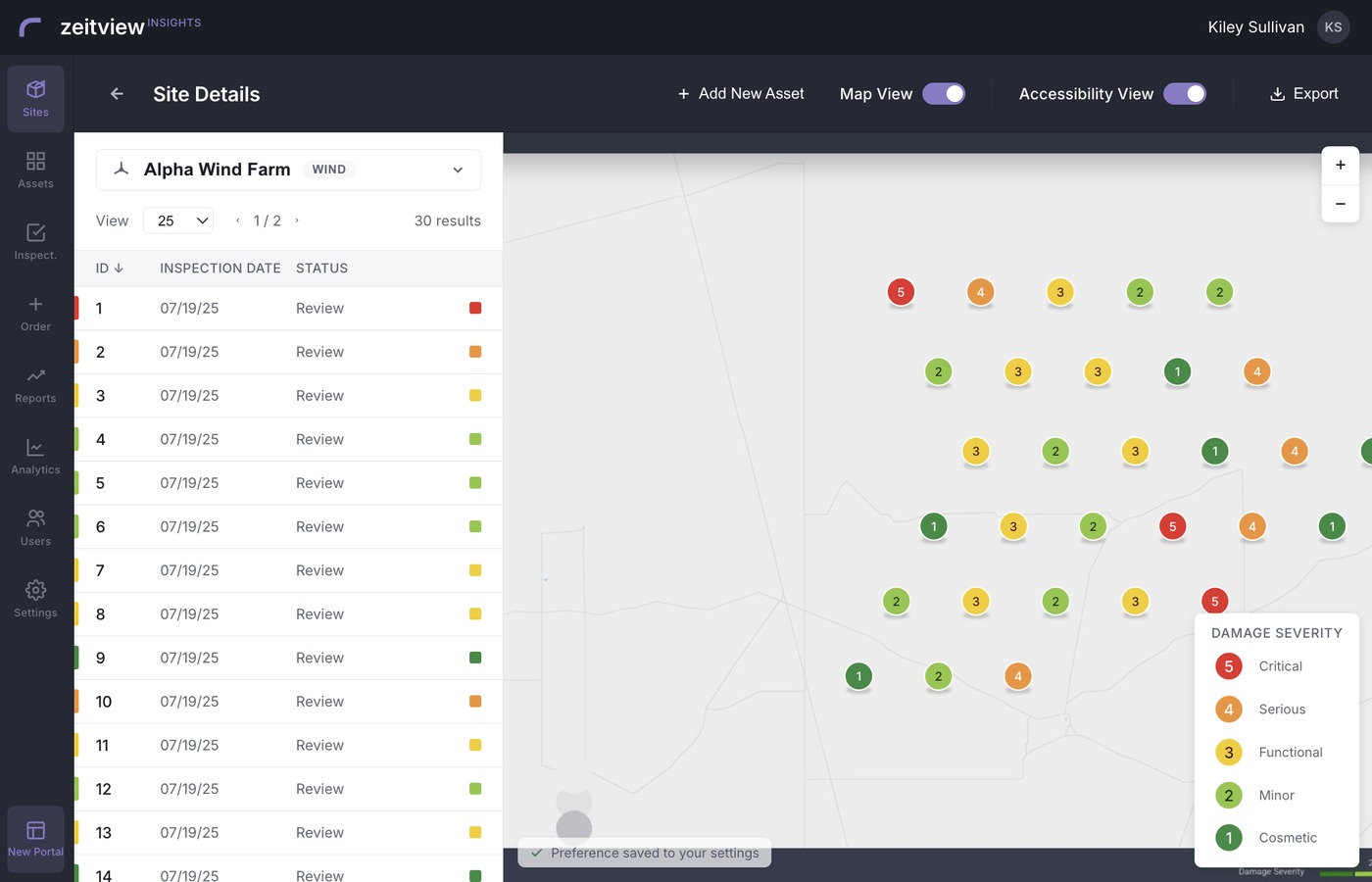
Accessibility View (colorblind mode toggle)
A prototype now in the Zeitview product backlog. The existing map encoded anomaly severity (1 to 5, Cosmetic through Critical) with color-coded dots only, which fails WCAG 2.1 SC 1.4.1. The toggle replaces color-only dots with larger markers showing the severity number centered inside, preserving color while adding a non-color channel. Toggle state persists to the user's account settings. Born from direct feedback from colorblind engineers at a major utility client.
Built with Claude · Shown via screenshot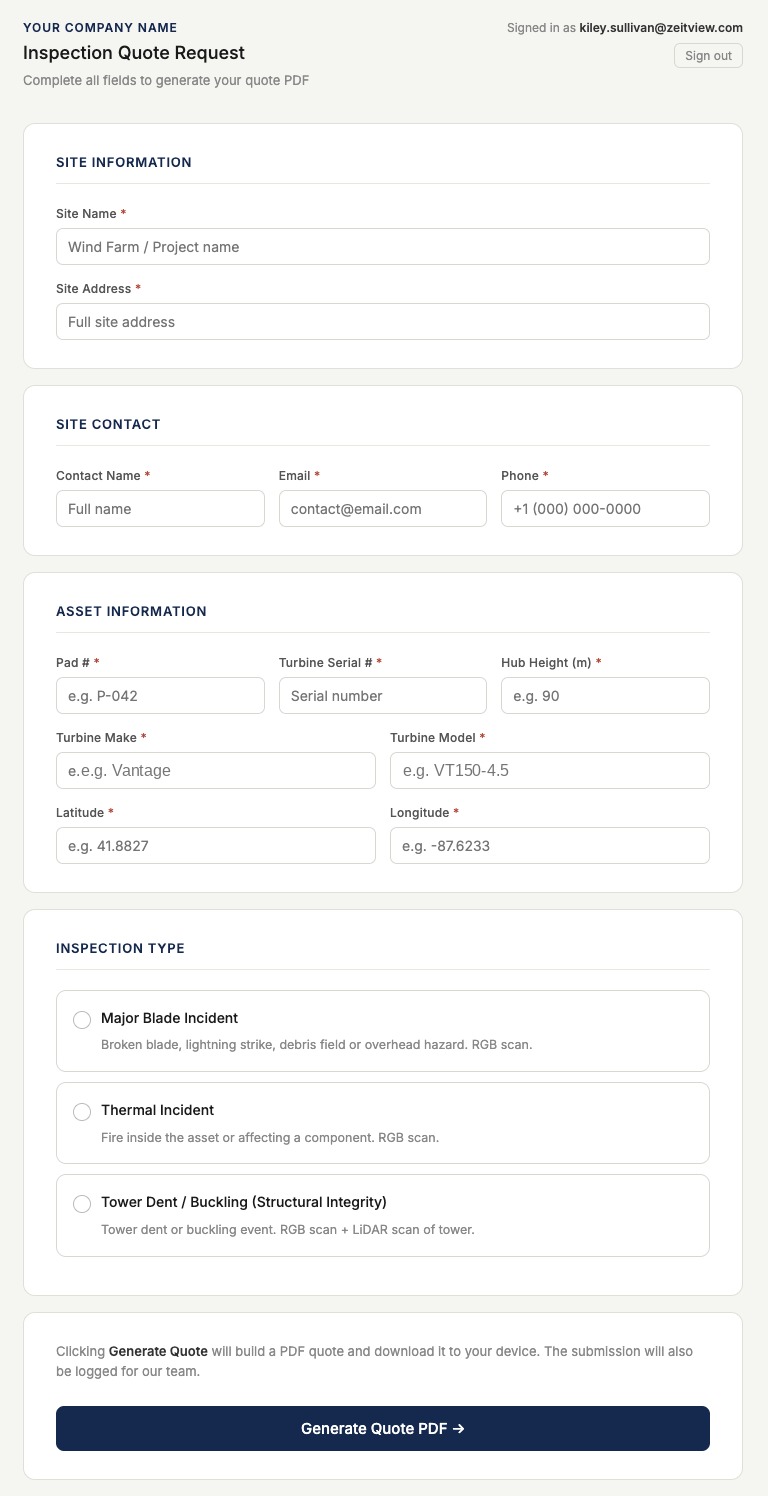
Inspection Quote Portal
Self-service quoting tool currently in engineering review, built for a leading wind turbine OEM to remove customer success from the critical path on event inspection quotes. The client generates their own quote and initiates PO generation directly, which matters most for time-sensitive Serious Incident inspections. Built with Clerk two-factor authentication. A future iteration will push Slack notifications to Ops at submission.
Built 0 to 1 using Claude and Claude Code · Prototype available on request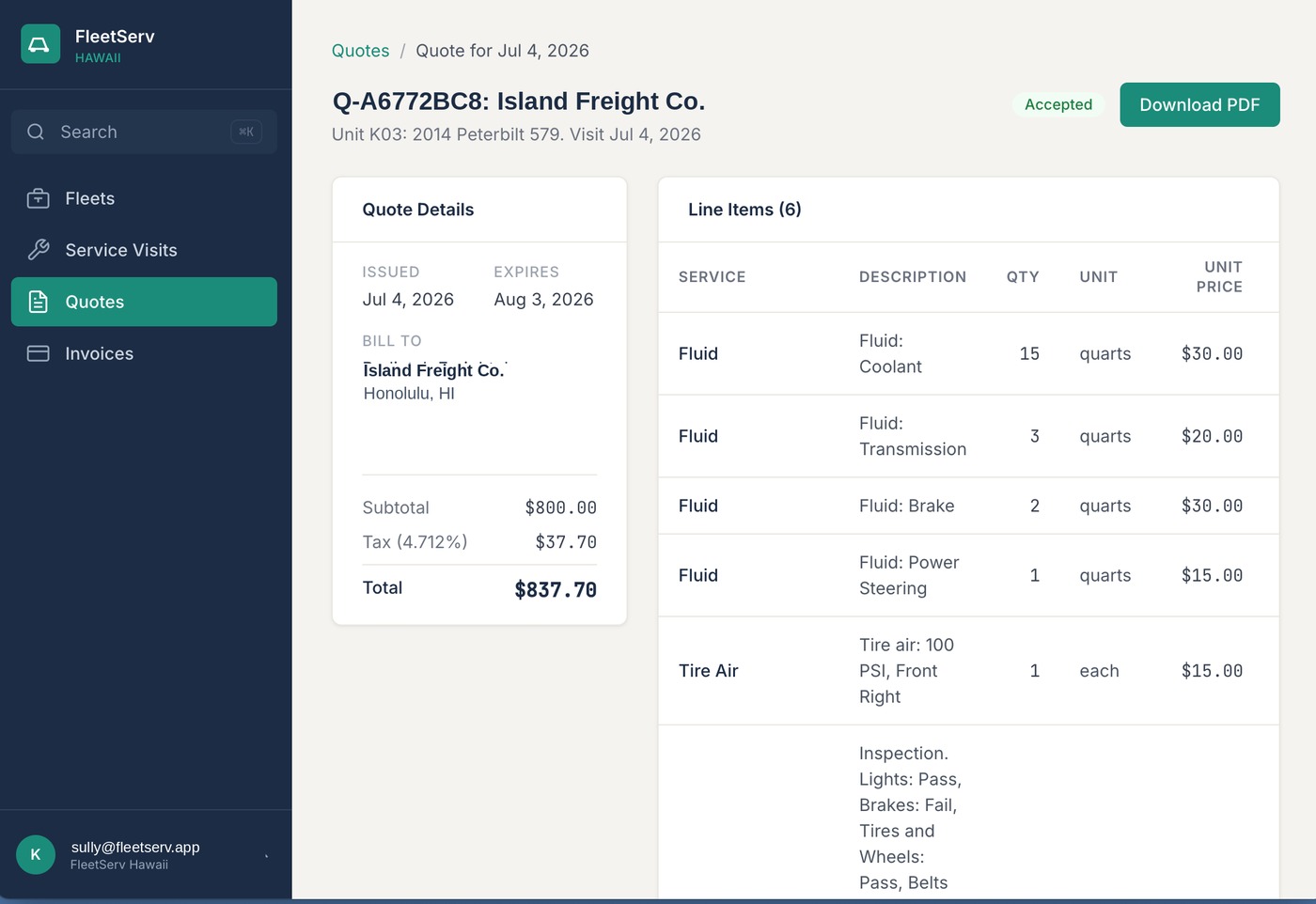
FleetServ
A quoting and invoicing platform I designed and built for a new fleet-services company on Oʻahu. The business runs mobile maintenance for trucking fleets, and FleetServ lets the team build a quote and turn it straight into an invoice in one place, rather than working across separate tools. It came together quickly, including a full design system, from concept to a working prototype.
Built 0 to 1 using Claude and Claude Code · In early use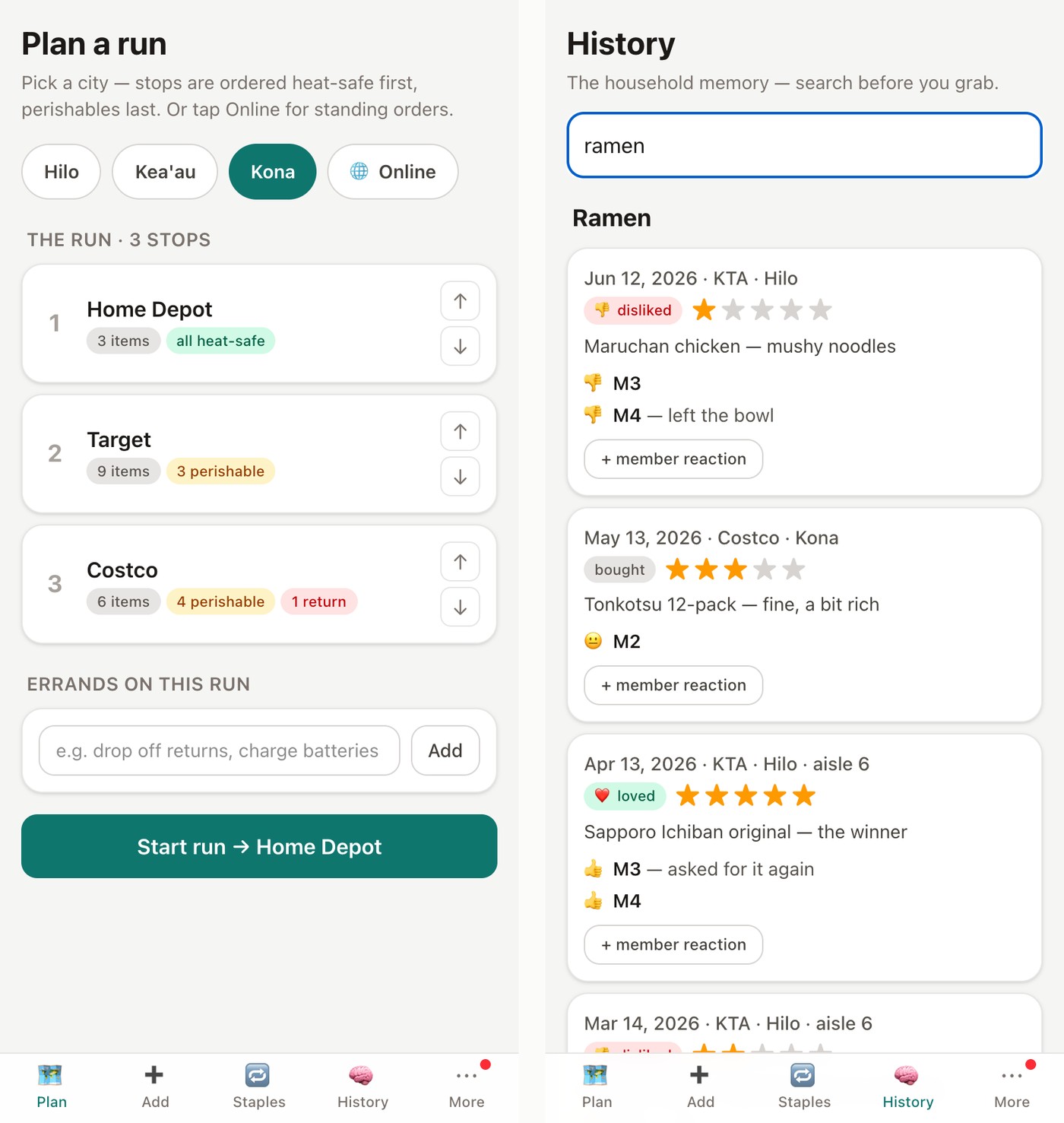
The Shopping List
A multi-store shopping planner built for one household: mine. Shopping on Hawaii Island is a city run rather than a single store, so the app assembles a run from every store in a chosen town that has needed items, orders the stops so heat-safe stores come first and perishable-heavy stores last, and gives the shopper a per-store checklist sorted by the aisle codes it learns as items get bought. A purchase memory records every buy with ratings and per-member reactions, so standing in front of eight ramen options is a solved problem: search ramen and see the winner, the too-rich one, and who left the bowl. It shipped as a working eight-screen app from a single build session run from a written brief, and the first week of real household use drove three logged follow-up changes.
Specced in Claude, built 0 to 1 using Claude and Claude Code · In use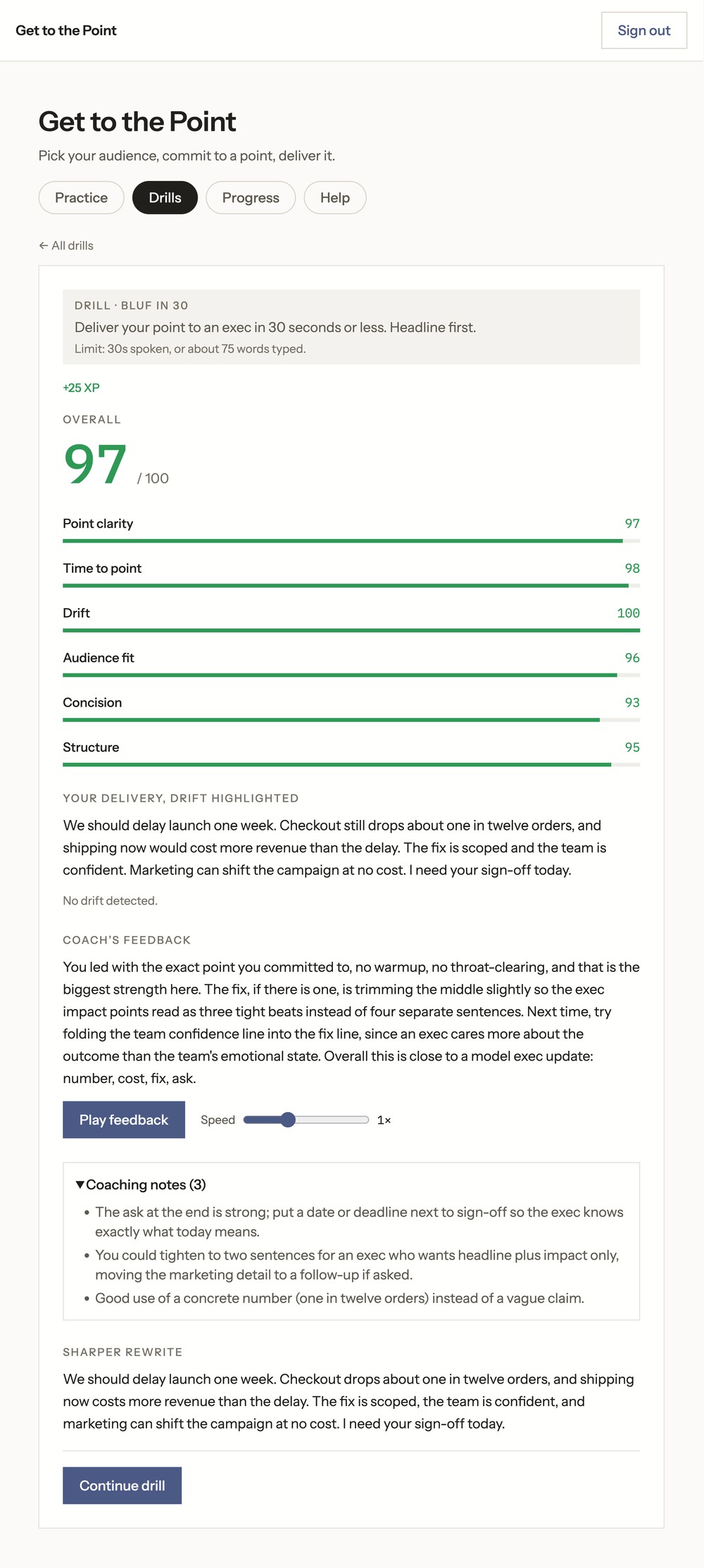
Get to the Point
A conversational clarity trainer built for exactly two users: me and my sister, invite-only with signups disabled. Feedback on how you talk is vague and late, so this makes it a practice loop: pick your audience, commit to your point in one sentence, deliver it by voice or text, and get scored on how fast and clearly it landed, with tangents highlighted and a tighter rewrite offered back. Day one surfaced a voice-versus-text scoring bias in the evaluator itself, fixed the same afternoon. Read the case study.
Specced in Claude, built 0 to 1 using Claude and Claude Code · In use